
How to Stop a Detached Garage Looking Like an Afterthought
How Can You Make a Detached Garage Look Like It Belongs?
The key is to design it as part of your property rather than as a separate building.
Choosing the right materials, roofline, proportions and position will help the garage feel connected to your home instead of looking like it was added later.
At a Glance
To help a detached garage blend in with your home:
- Choose materials that complement the house
- Keep the roof pitch and proportions similar
- Position the garage carefully on your plot
- Finish the base neatly
- Use landscaping to tie everything together.
Why do detached garages often look like an afterthought?
Detached garages often look like an afterthought because their materials, proportions or position don't suit the main house.
What Is The Best Option For A Detached Garage?
If you want the garage to feel like part of the property, start by choosing the right material.
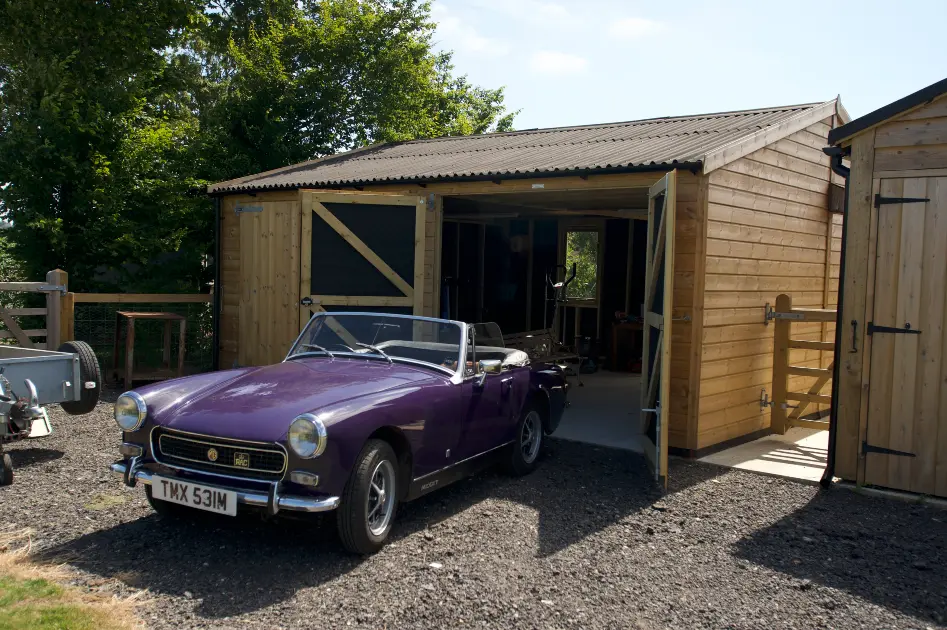
In most cases, a timber garage is the best option.
Unlike brick or masonry structures, a wooden garage doesn’t depend on an exact match with the house to look right. Wood also has a timeless look. A well-designed timber garage can sit next to a period home or a modern build without looking out of place.
Another advantage is flexibility. With timber, you can choose the cladding, colour and details to suit your home. Over time, untreated timber weathers to a soft silver-grey, giving the structure a more relaxed, natural finish that blends into most surroundings.
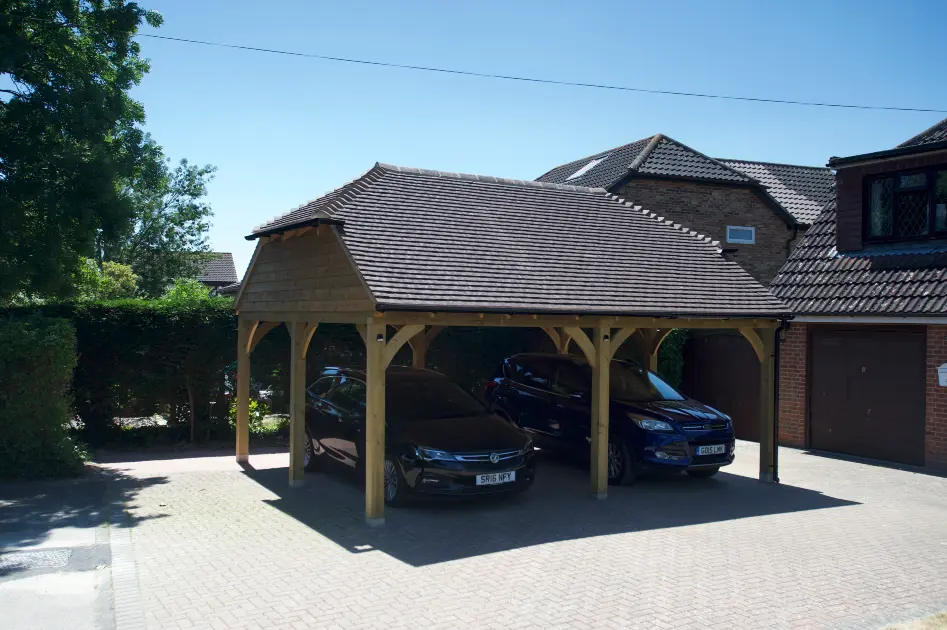
If you don’t have room for an enclosed garage, consider a timber carriage house or carport.
Once you’ve chosen the material, you can focus on the design details.
If you're still undecided, read our article on timber garages vs brick garages.
Should the garage roofline match the house?
The roofline is one of the first things people notice, even if they don’t realise it. When the angles are similar, the garage naturally feels connected to the house. If they are very different, the separation becomes more evident.
You don’t need to copy the house’s roofline exactly, but there should be a clear link between the two.
- Make sure the garage roof is lower than the main house
- Keep the roof pitch similar where possible
- Match the direction of the house’s gables, if it makes sense.
Our garages are designed with a 17° roof pitch, which works well alongside most modern and traditional properties.
Our article on roof types and terminology can be helpful if this is sounding a little complicated.
What proportions should a detached garage have?
A common mistake make people make is oversizing the garage. It’s tempting to maximise storage or height, but it can make the garage look too large for the property.
- Make sure the garage suits the size of your plot
- Keep wall heights slightly lower than the main house
- Avoid oversized windows and doors that look too large for the house.
Where should you position a detached garage?
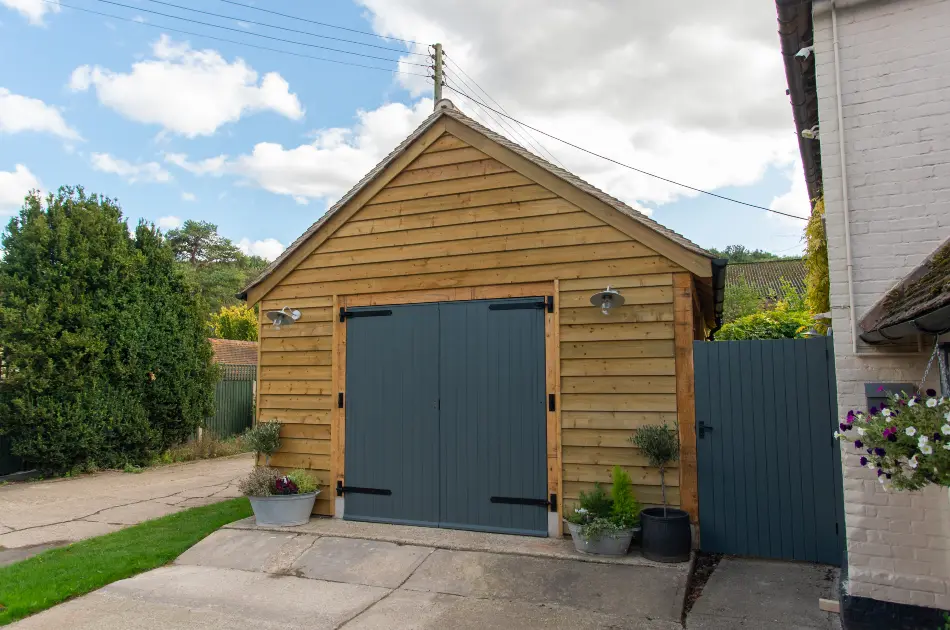
Even a well-designed garage can feel awkward if it’s in the wrong spot. A detached garage should be practical without taking attention away from the house.
- Line it up with the driveway so vehicles can enter and exit easily
- Avoid squeezing it into leftover space at the edge of the plot or garden
- Keep it parallel with a clear reference line (usually the house; sometimes the driveway or boundary)
- Make sure it doesn’t block views of the house from the road
- If the plot isn’t perfectly square, line the garage up with the house rather than the boundary.
Before deciding where to build, it's worth checking whether planning permission or permitted development rules apply. You can find the latest guidance on the Planning Portal.
How should the base be finished?
The base affects how solid, permanent, and well-integrated a detached garage looks.
If the garage doesn’t sit properly on the ground (too high or low), it can look unfinished or temporary.
- Keep the ground around the house and garage at a similar level
- Plan the drainage before you start building
- Make sure the concrete base has a neat finish
- Fill any gaps and level the ground around the garage.
How does landscaping tie the garage in?
Bare ground, different paving or unfinished edges can make the garage stand out. Simple, consistent landscaping helps the garage feel part of the property.
- Use the same or complementary driveway materials
- Create a clear path between the house and the garage
- Add planting around the sides to soften the transition to the garden.

Design a Detached Garage That Looks Like It Belongs
At Olson Timber Buildings, we build timber garages that are practical, well-proportioned, and made to sit comfortably within your property.
We offer single, double, and triple wooden garages, as well as custom-built options, constructed with 4” x 2” (100mm x 50mm) pressure-treated CLS framing, integrated guttering, and downpipes.
Frequently Asked Questions
Should a detached garage match the house?
Not exactly. It should complement the house by using similar proportions, rooflines and materials rather than trying to copy every detail.
Can a detached garage increase property value?
A well-designed detached garage can make a property more attractive to buyers and may increase its value.
Where's the best place to build a detached garage?
In most cases, it works best alongside the driveway and where it doesn't dominate the front of the house.
Can I build a detached garage under permitted development?
Many detached garages can be built under permitted development, but this depends on their size, height, location and how they will be used.
What material is best for a detached garage?
The best choice depends on your property, but timber is often popular because it suits both traditional and modern homes and offers plenty of design flexibility.