


Stable Yard Design: How to Plan a Practical Layout
How Do You Plan the Perfect Stable Yard?
A well-planned stable yard makes everyday jobs easier while keeping your horses comfortable and safe.
Think about:
- The best location for your stables
- Access for horses, vehicles and deliveries
- Drainage and ground conditions
- Stable size and layout
- Water, electricity and lighting
- Tack, feed and hay storage
- Your daily routine
- Space for future expansion.
Where Should You Build Your Stable Yard?
Most of us don't have unlimited space, so the best location is usually a balance between practicality and what's available.
Before deciding where to build, think about:
- Access to water and electricity
- The prevailing wind and weather
- How close the yard is to your fields
- Space for deliveries and horseboxes
- Drainage and ground conditions.
A south or south-east facing stable is often a good choice. It catches the morning sun while avoiding some of the hottest afternoon temperatures in summer and offers protection from the worst of the prevailing weather.
It's worth visiting the proposed location throughout the year if you can. A spot that looks perfect on a sunny day may be very different after weeks of winter rain.
Once you've found the right location, it's worth checking whether you'll need planning permission before you start building. Read our guide to planning permission for horse stables to find out what applies to your project.
Think About Access
Good access makes everyday life much easier.
You'll need enough space for your vet, farrier, feed deliveries and horseboxes to reach the yard safely. Think about how vehicles will turn around, where they'll park and whether you'll have enough room to unload hay, bedding and feed.
Easy access to turnout fields is just as important. The shorter the walk between the stable and the field, the easier daily routines become.
Don't Overlook Drainage
Poor drainage quickly leads to mud, standing water and slippery walkways, making the yard less pleasant for both horses and people.
If possible:
- Choose naturally well-drained ground
- Avoid low spots where water collects
- Install suitable drainage where needed
- Use hardstanding around gateways and entrances
- Position the muck heap where runoff won't cause problems.
Planning drainage from the beginning is usually much easier than trying to fix problems later.
What Size Should a Stable Be?
The British Horse Society recommends a minimum stable size of 12ft x 12ft for most horses, with smaller sizes suitable for ponies.
Many owners choose 12ft x 14ft, so horses have more room to move around and it’s easier to keep the stable clean.
If you're unsure what size you need, read our guide to choosing the right stable size for your horse.
Plan Water, Electricity and Lighting
If possible, position your stables close to existing water and electricity supplies. It can make installation simpler and help keep costs down.
Think about what you'll need every day, including:
- Water for filling buckets or automatic drinkers
- Lighting inside each stable and around the yard
- Outdoor sockets for clipping or power tools.
If electricity isn't available, solar lighting can provide a useful temporary solution. It's still worth planning for a future electrical supply while the yard is being designed.
Choose a Stable Layout That Works
The best layout depends on the number of horses you keep and how you use your yard.
Straight Stable Blocks
A straight run of stables is a simple, practical choice and works well for smaller yards or where space is limited.
It's easy to access, cost-effective to build and can be extended later if you need more stables.
L-Shaped Stable Blocks
L-shaped layouts provide shelter from the weather and leave plenty of room for tack rooms, feed stores or hay storage. They're also easy to extend if you need more stables in the future.
U-Shaped Stable Blocks
A U-shaped yard creates a sheltered courtyard that's practical throughout the year.
It's ideal for larger yards and provides plenty of space for tack rooms, feed stores, wash bays and other facilities. Many owners also enjoy the more social feel created by having the stables arranged around a central yard.
American Barns
By bringing everything under one roof, American barns let you muck out, feed and care for your horses under cover.
They're also ideal if you want to include tack rooms, wash bays, storage or other facilities within the same building.
Think About Your Daily Routine
Small decisions can make a big difference when you're using the yard every day.
Ask yourself:
- How far is it from the house?
- Can you keep an eye on the horses from the house?
- Will you be carrying hay or feed long distances?
- Where will deliveries arrive?
- Is there enough room to turn a trailer or horsebox?
- Is the muck heap in a practical location?
Leave Room for the Future
You might eventually want:
- An extra stable
- A larger tack room
- A feed room
- A hay store
- A wash bay
- A horse walker.
Leaving space around the block now is better than trying to squeeze another building in later.
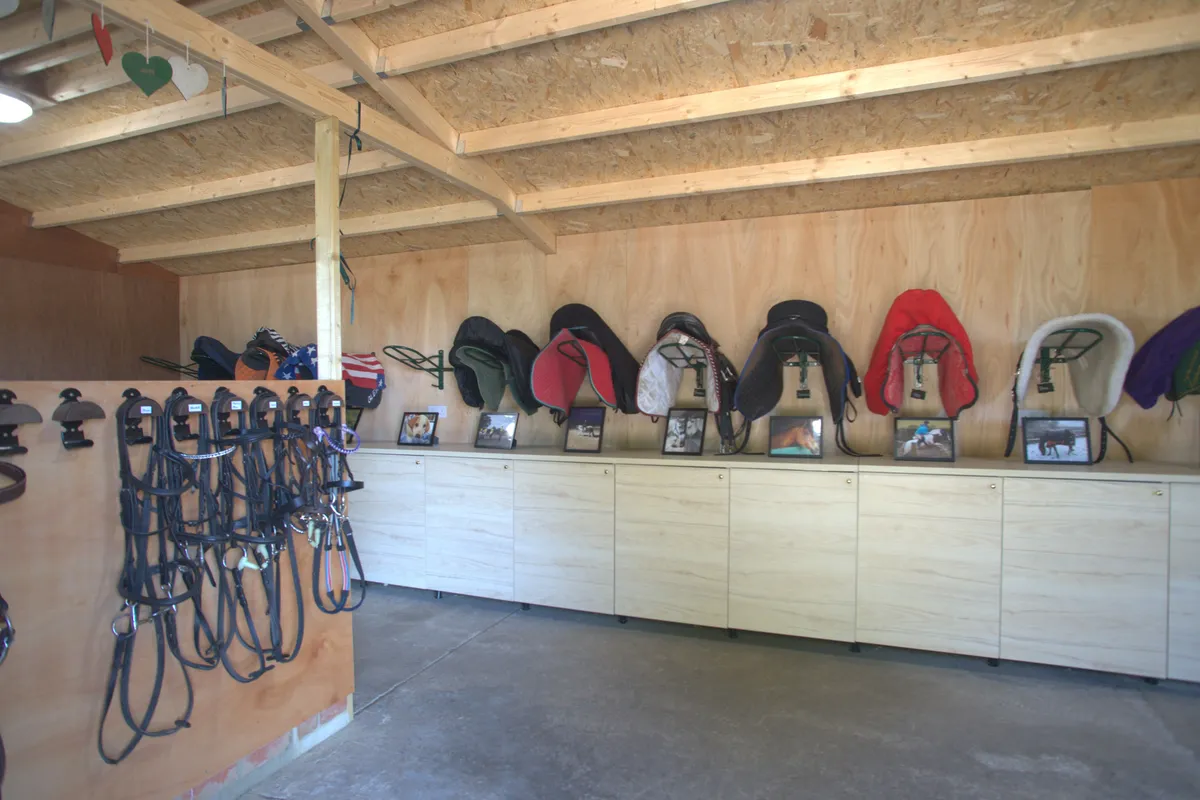
Plan Your Storage From the Start
Horse ownership comes with a surprising amount of equipment.
As well as tack and feed, you'll need somewhere for bedding, rugs, wheelbarrows, tools and grooming equipment.
Including dedicated storage from the beginning helps keep the yard tidy and makes everyday jobs quicker.
The Little Details
Once you've planned the layout, you can start thinking about the finishing touches.
A wash-down area, somewhere to tack up, good lighting and plenty of storage all make the yard easier to use.
You might also want to add a sink, worktop or small seating area to the tack room. These small additions can make a long day on the yard much more comfortable.
Design a Stable Yard That Works for You
Every horse owner uses their yard a little differently, which is why every Olson stable is built to order.
Whether you're planning a single stable, an L-shaped block, a larger U-shaped yard or an American barn, we'll help you create a layout that works for you, your horses and your property.
Take a look at our ranges or get in touch with our team for friendly advice and a bespoke quotation.
Frequently Asked Questions
What's the best layout for a stable yard?
It depends on the number of horses you keep, the space available and how you use your yard. Straight runs, L-shaped blocks, U-shaped layouts and American barns have different advantages.
Which way should horse stables face?
Many horse owners prefer a south or south-east facing stable. This helps make the most of the morning sun while providing some protection from the prevailing weather. The best position will also depend on your site and local conditions.
How far should a stable be from the house?
There's no fixed distance. Ideally, your stables should be close enough for easy access while still giving horses a quiet environment. Think about your daily routine, deliveries and access to fields when choosing the location.
What should every stable yard include?
As well as stables, it's worth planning for water, electricity, lighting, storage, a muck heap, tack and feed rooms, and safe access for horses and vehicles.
Can I add more stables later?
Yes. If you think your yard may grow in the future, it's worth leaving space for additional stables, storage or other facilities. Planning ahead now can make future expansion much easier.

.svg)
