


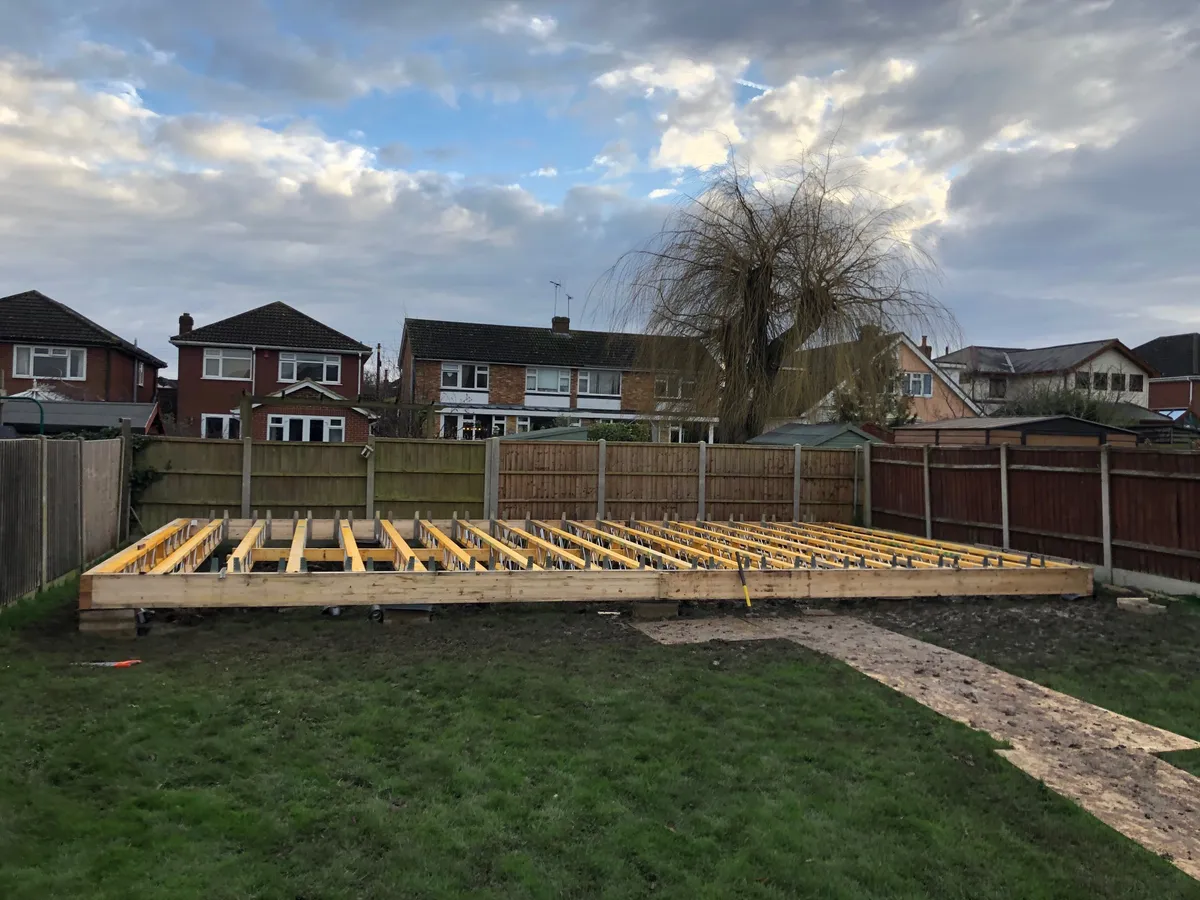
Garage Near a Boundary: What You Need to Consider
How Close Can You Build a Garage to a Boundary?
In many cases, you can build a garage right up to the boundary under Permitted Development. The key restriction is height.
According to the UK Planning Portal:
- If the garage is within 2 metres of a boundary, the maximum overall height is 2.5 metres
- If it’s more than 2 metres away, you can build higher (up to 4 metres for a dual-pitched roof, or 3 metres for other roof types).
Because of this, position and design usually need to work together. Moving the garage slightly away from the boundary can give you more flexibility with height and roof style.
It’s also worth checking exactly where the boundary sits before you build. Even small details like roof overhangs or gutters need to stay within your land, as crossing the line can cause issues with your neighbour.
* Conditions, boundaries, and planning rules can vary from site to site, so it’s important to check what applies before you build.
Check Whether Planning Rules Affect Your Site
Permitted Development covers many garage builds, but there are situations where those rights don’t apply. If that’s the case, you’ll need to apply for planning permission.
This commonly applies to:
- Newer housing developments where building rights were limited from the start
- Properties where the council has removed normal permitted rights (Article 4)
- Conservation areas, National Parks, or National Landscapes where stricter rules apply
- Listed buildings, where you usually need permission for any new structure.
In these cases, where you place the structure matters even more.
For more information, read our guide to planning permission for garages and carports.
If you're unsure what applies to your property, it's always worth speaking to your Local Planning Authority before you start building.
Building Regulations and Fire Safety
Even if a detached garage falls under Permitted Development, Building Regulations can still apply.
Because timber is a combustible material, leaving some space (at least 1m) between the garage and the boundary is often the easiest way to keep the build simpler.
If the building is larger or positioned very close to neighbouring structures, it’s worth checking what applies before you build.
Start With Access, Not Just Space
Positioning a garage near a boundary can seem like the obvious way to keep as much garden space as possible, but access is often the bigger factor.
Before deciding on the position, check:
- Whether you can approach in a straight line
- Whether there’s enough room to turn your vehicles
- If there’s enough space to comfortably open doors
- Whether you’ll need to reverse in or out every time
- How it connects to the driveway or entrance.
Think About How You Will Use The Garage
Where you build also affects how practical your garage will be to use day to day.
For example:
- Is it close enough to the house to access easily in bad weather?
- Does the entrance face the most convenient direction?
- Will you be using it just for parking, or also for storage or a workspace?
- Will you need side access for bikes, tools, or equipment?
Garages placed tight to a boundary can work well for simple storage. But if you’re using the space regularly, a slightly more open position can make it feel easier and more comfortable to use.
Understand Ground Conditions and Plan For Drainage
Drainage is worth thinking about when building close to a boundary, especially if the ground slopes or water tends to collect after heavy rain.
Before you finalise the position, it’s worth checking:
- Whether the ground slopes towards or away from the boundary
- If water tends to collect in that area after rain
- What the ground is like beneath the surface (firm, soft, made-up, or uneven).
Placing a garage in a poorly drained spot can lead to standing water, damp, and ground movement. Even a small change in position can make the garage easier to maintain and more reliable over time.
Also, make sure rainwater is directed away from neighbouring properties, as it can cause problems if it collects or runs beyond your boundary.
Avoiding Issues With Neighbours
Building a garage near a boundary can raise issues with your neighbours.
To reduce the risk of objections:
- Speak to your neighbours about your plans early on
- Keep the height down
- Consider how the building will look from the neighbouring side
- Break up large walls where you can
- Think about where doors and windows face, avoiding direct views into neighbouring spaces
- Keep roof overhangs and gutters within your boundary
- Add some soundproofing if you plan to use tools or equipment
- Plan the build to keep disruption low by sharing start dates, sticking to working hours, and keeping everything within your property.
Do You Actually Want to Build Right Up to the Boundary?
Even if you can build up to the boundary, it’s not always the best option.
Leaving a small gap of a few metres can make a big difference. It gives you space for:
- Maintenance, like painting, repairs, or gutter cleaning
- Better airflow around the building
- Easier roof access.
Design a Detached Garage That Actually Works
Where you place your garage is just as important as the building you choose.
At Olson Timber Buildings, our wooden garages are made to order, so they can be designed around your plot and needs from the start.
If you’re planning a new garage and want to get the positioning and design right, get in touch with our team.
Frequently Asked Questions
Can I build a timber garage close to a fence?
Yes. In many cases you can, provided the design meets any planning and Building Regulations requirements that apply to your property.
Should I leave a gap between my garage and the boundary?
If you have the space, it's usually a good idea. A small gap makes it easier to carry out maintenance, clean the gutters and access the roof if you ever need to.
Can my garage roof or gutters overhang the boundary?
No. Roof overhangs, gutters and other parts of the building should stay within your boundary to help avoid problems with neighbouring properties.
What's the best base for a garage near a boundary?
That depends on the ground conditions and the type of garage you're building. A level, well-drained base will help provide a stable foundation and reduce the risk of future problems.

.svg)
