

How to Get Electricity to a Garden Office or Studio
How Do You Get Electricity to a Garden Office?
Most garden offices get their electricity from the main house using an underground armoured cable. Larger buildings sometimes have their own consumer unit, while some smaller or occasional-use buildings can be powered by solar panels and battery storage.
The right solution depends on how you'll use the building, how much power you'll need, and where it's positioned in your garden.
Garden Room Electrics: Ways to Supply Power
There are several ways to power a garden studio.
The most common options include:
- Running power from the house using an underground armoured cable
- Fitting a sub-consumer unit
- Installing solar panels and an off-grid power system.
It’s worth planning how electricity will reach the studio early on, so the design can accommodate it.
Electrical installations must meet UK electrical safety regulations, so they need to be carried out or certified by a qualified electrician.
Option 1: Running Power from the Main House
The most common way to supply electricity to a garden room is to run power from the main house.
A qualified electrician will usually install steel wire armoured (SWA) cable from the property’s consumer unit to the garden building. This cable is designed for outdoor use and is usually buried underground so it's protected from damage and weather.
Once the cable reaches the garden studio, it can supply lighting, sockets, and other electrical equipment.
Option 2: Fitting a Consumer Unit in the Garden Studio
In larger garden rooms that need more power or multiple circuits, electricians often install a small consumer unit.
The power still comes from the house through an armoured cable, but the studio has its own distribution board to manage the supply.
This allows to have separate lines for lighting, sockets, and electric heating, and makes it easier to add equipment later if you use the space as a permanent home office.
Option 3: Installing Solar Panels and a Battery System
In some cases, a garden studio can be powered by an off-grid solar system. Roof-mounted panels generate electricity, which is stored in batteries and used to run lights, sockets, and small appliances.
Solar can work well for buildings used occasionally, especially where running a cable from the house would be difficult. However, the amount of electricity produced by the panels depends on how much sunlight they receive.
If you use your garden office regularly, you can combine solar panels with a mains connection to provide more reliable power year-round.
If you're considering generating your own electricity, you might also find our article about installing solar panels on a garage roof useful.
How Installation Works
Electricians start by checking the capacity of the consumer unit in the house. This helps them decide whether the garden studio can run on an existing circuit or needs a new one.
They then plan the layout of sockets, lighting, and switches inside the building so the space works comfortably. This might include wall sockets for computers and equipment, ceiling lighting, and heating power.
From there, electricians run a steel-wire-armoured cable through a trench to the garden building.
The distance between the house and the garden room affects the cable size and overall electrical design.
Once the cable reaches the building, it can supply sockets, lighting, and any electrical equipment inside the studio.
Some homeowners also choose to run Ethernet or data cables to provide a better internet connection.
What Affects the Cost of Supplying Power
The cost of installing electrics in a garden room varies depending on several factors.
Distance from the House
The further the building is from the house, the longer the cable run will be. Longer runs require more materials and labour, and sometimes a thicker cable to keep the supply reliable.
Ground Conditions for Trenching
If the ground is hard, rocky, or already paved or decked, the installation can take longer and require extra work.
Cable Size and Electrical Demand
The size of the cable depends on how much electricity the garden studio will use. Higher demand can require heavier-duty cable and additional electrical protection.
Whether a Consumer Unit is Installed
Installing a sub-consumer unit makes the electrical system more flexible and easier to expand later, but it can increase installation costs.
Running Water to a Garden Studio
Some garden studios include a sink, a kitchenette, or a small bathroom. In these cases, plumbers can connect the building to the house’s main water supply.
A plumber usually runs underground pipework from the property to the garden building in a similar way to electrical cabling.
If the studio includes a sink or bathroom, wastewater will also need to connect to the existing foul drainage system or another drainage solution.
As with electrics, planning water connections early makes the installation simpler.
Check out our guide to converting a timber building into a home office for more ideas.
Typical Costs
The cost of supplying electricity to a garden studio varies depending on the distance from your house, the amount of power you need and whether a new consumer unit is required.
As a rough guide, based on data published on MyBuilder:
- Simple electrical connection: around £800–£1,500
- More complex installations: £1,500–£3,000+.
If you need trenching, consumer unit upgrades or longer cable runs, costs can increase.
Looking For a Comfortable, Durable Garden Studio?
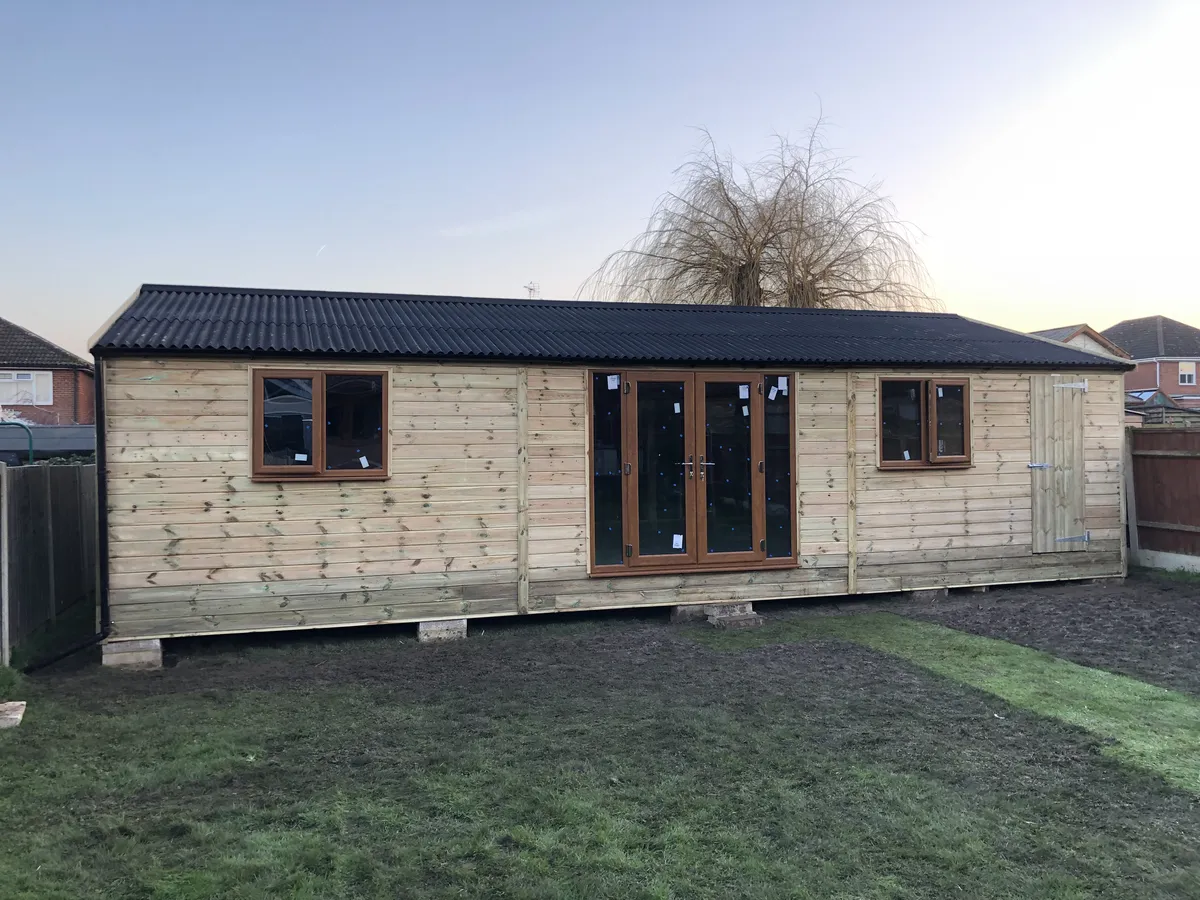
At Olson Timber Buildings, we make every garden studio to order, tailoring the design, size, and layout to your space and how you plan to use it.
We use strong timber framing and insulated construction to create a building that feels warm, quiet, and inviting year-round.
Features typically include:
- Pressure-treated timber framing
- Double-glazed windows
- Fully insulated floor, walls, and roof
- Breathable membrane and internal lining
- Onduline roof covering, with other options available
- Optional decked porch with balustrade and canopy.
If you are planning a garden studio - whether you plan to use it as an office, gym, or hobby room - our team can help you choose a design that works for your garden and ensures utilities such as electricity can be installed smoothly.
Frequently Asked Questions About Getting Electricity to A Garden Office
Can I run electricity to a garden office from my house?
Yes. Most garden offices are connected to the house using an underground steel wire armoured (SWA) cable installed by a qualified electrician.
Do I need a consumer unit in a garden office?
Not always. Small garden offices often don't need one, but larger buildings with more electrical equipment usually do.
Can a garden office run on solar power?
Yes. Solar panels and battery storage can provide enough electricity for some garden buildings, especially those used occasionally. Many homeowners choose a mains connection for more reliable year-round power.
How much does it cost to install electricity in a garden office?
Many installations cost between £800 and £3,000, but more complex projects can cost more. The cost depends on the distance from your house, the cable needed, and the amount of electrical work required.
Can I install the electrics myself?
Electrical work must comply with UK Building Regulations. Most homeowners use a qualified electrician to install or certify the work safely.